Drinking Water Treatment in Nepal: Practical Choices
The appropriate household treatment depends on the water source and tested contaminants. A filter that improves taste does not necessarily make microbiologically unsafe water safe.
Quick decision checklist
| Water safety question | Evidence to request |
|---|---|
| Source | Municipal supply, borehole, tanker or stored rainwater |
| Testing | Recent laboratory results for relevant microbial and chemical parameters |
| Treatment | Written explanation of which contaminants the proposed system addresses |
| Maintenance | Cartridge, lamp or membrane replacement schedule and estimated costs |
| Verification | Follow-up water testing and safe-storage instructions |
Identify the water source
Municipal piped water, private boreholes, tanker deliveries and stored rainwater can have different risks. Record storage conditions, interruptions, recent flooding and changes in colour or odour. Visual clarity alone does not establish drinking-water safety.
Test before selecting expensive equipment
Use an appropriately qualified laboratory for parameters relevant to your source. Microbial contamination, turbidity, iron, arsenic and other dissolved substances require different responses. Ask the laboratory what the results mean against current Nepal drinking-water standards.
Understand treatment methods
Boiling can inactivate many disease-causing microorganisms when done properly but does not remove dissolved chemicals. Sediment filters reduce particles but are not a substitute for disinfection. UV treatment depends on water clarity and functioning equipment. Reverse osmosis can remove many dissolved substances but needs correct design and maintenance.
Keep storage and handling hygienic
Clean covered tanks, taps and collection vessels matter as much as treatment. Prevent untreated water from bypassing the treatment system. Replace cartridges and lamps to the manufacturer's schedule and document maintenance dates.
When to seek expert help
If testing detects concerning contamination or illness is suspected, seek advice from qualified water professionals and relevant health services. Re-test after corrective work. Avoid relying on a seller's unsupported claim that a device removes every contaminant.
Match the treatment to the contaminant
Different contaminants require different technologies. A sediment filter may reduce visible particles while leaving microorganisms and dissolved chemicals. Activated carbon can improve certain tastes and odours but is not a universal disinfection system. Ultraviolet systems require suitable water clarity and maintained lamps. Membrane systems require appropriate pressure and regular replacement of filters. Ask sellers to identify which tested contaminants the device is designed to address.
Storage tanks can recontaminate treated water
Inspect tank covers, overflow openings, inlet connections and cleaning access. Water that passes through a suitable treatment system can become unsafe if stored in a dirty open container or handled with contaminated utensils. Keep treated and untreated lines clearly separated. After repairs or contamination events, seek professional guidance on cleaning and re-testing.
What a laboratory report should tell you
A useful report identifies sample date, collection point, measured parameters, units and comparison standard. Ask whether sampling and transport conditions were appropriate. A single sample describes the conditions at that time; quality may vary seasonally or after floods and pipe interruptions. If results are concerning, obtain interpretation from a qualified professional before selecting treatment.
Avoid misleading sales claims
Statements such as '100 percent pure', 'removes all bacteria and chemicals' or 'maintenance free' need strong evidence. Request independent test documentation for the actual product model and operating conditions. Do not assume a brand label or a salesperson's demonstration is equivalent to testing your household water.
Questions to ask before choosing
What matters more than a low price?
A clear scope, competent delivery and documented accountability. Compare like-for-like offers and ask about hidden costs.
Does a listing prove a provider is licensed?
No. A business listing is not proof of licensing, government approval or ownership verification. Check any regulated credentials with the issuing authority.
How can I compare local providers?
Start with the category directory, shortlist relevant services, confirm each business's current contact details and request comparable written information.
Explore related Ratings Nepal resources
- Household drinking-water testing and treatment guide
- Plumbing services in Nepal
- Diagnostic laboratories directory
Browse Ratings Nepal categories and recent guides. Share an honest firsthand review where that functionality is available. Avoid relying on anonymous claims without supporting evidence.
Image credit
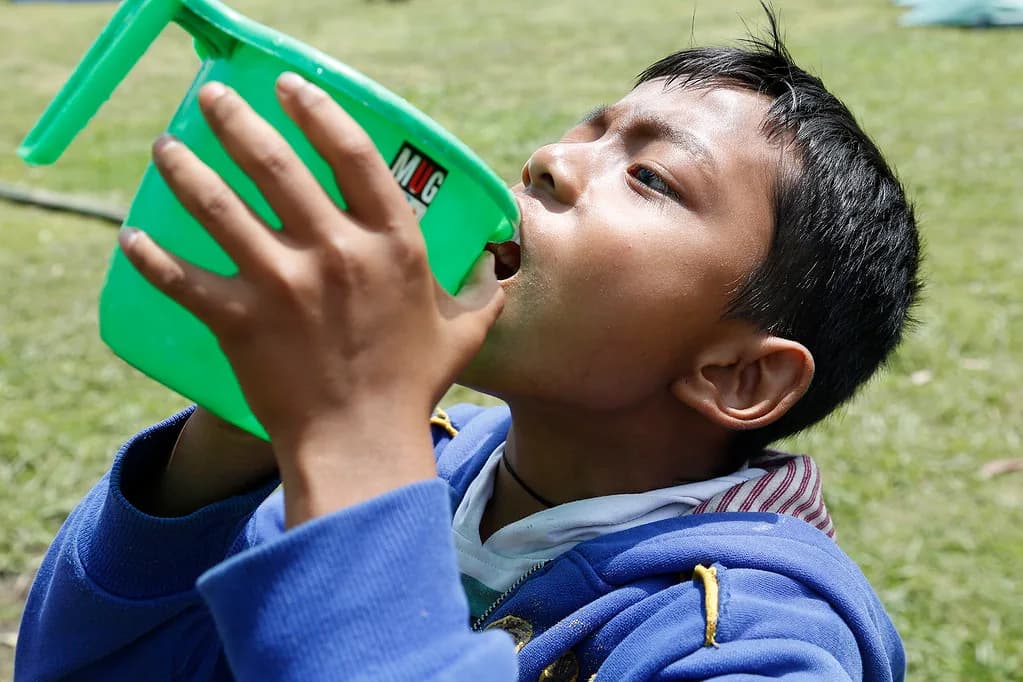
Photo: DFID - UK Department for International Development, CC BY 2.0 (https://creativecommons.org/licenses/by/2.0/). Image depicts emergency water treatment, not a domestic product.
Editorial checklist updated 13 November 2026. Providers and service conditions should be rechecked before making a purchase.