
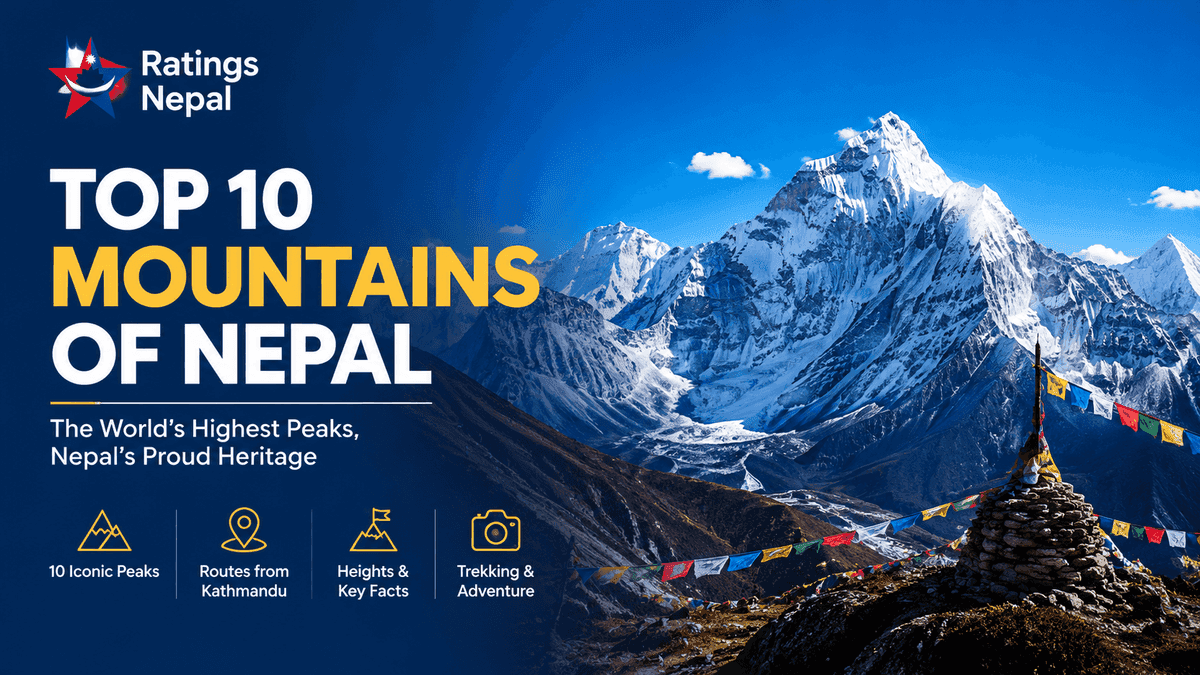
Discover the Top 10 Mountains of Nepal
A Complete Guide to Nepal’s Tallest Peaks
Nepal is home to some of the most spectacular mountains on Earth. These peaks are not only the highest on the planet but also define Nepal’s culture, adventure tourism, trekking experiences, and global mountaineering reputation. From the world’s tallest summit to remote giants that challenge even elite climbers, Nepal’s Himalayas are legendary.
1. Mount Everest (8,848.86 m)

Location: Solukhumbu District / Nepal–China border
Why it’s famous: The tallest mountain on Earth and a bucket‑list destination for climbers and trekkers worldwide.
Mount Everest, known locally as Sagarmatha, dominates adventure travel in Nepal. The classic Everest Base Camp Trek draws thousands of trekkers each year while elite mountaineers aim for the summit via the Southeast Ridge. The mountain’s massive presence and cultural significance celebrated in Sherpa tradition and global mountaineering make it Nepal’s most iconic peak.
Route from Kathmandu: Fly to Lukla → Trek via Phakding, Namche Bazaar → Everest Base Camp.
2. Kanchenjunga (8,586 m)

Location: Taplejung District / Nepal–India border
Why it’s famous: The third-highest peak in the world, Kanchenjunga is revered locally and is known for its massive multi-summit massif.
Kanchenjunga remains one of the less crowded mountains for trekking and climbing, offering remote Himalayan scenery and rich cultural experiences.
Route from Kathmandu: Fly or drive to Bhadrapur → Taplejung → Trek through remote villages to Kanchenjunga Base Camp.
3. Lhotse (8,516 m)

Location: Solukhumbu Region (Everest massif)
Why it’s famous: The fourth-highest mountain in the world, Lhotse shares much of its route with Everest before diverging toward the Lhotse Face.
Lhotse presents one of the most dramatic walls in high-altitude climbing, and climbers often witness its colossal face while trekking or climbing Everest.
Route from Kathmandu: Same as Everest → Lhotse shares base camp with Everest before diverging toward the Lhotse Face.
4. Makalu (8,485 m)

Location: Sankhuwasabha District / Nepal–China border
Why it’s famous: Known for its nearly perfect pyramid shape, Makalu is a technical challenge for mountaineers and a majestic sight in the Mahalangur Himal.
The surrounding Makalu Barun National Park offers trekking trails rich in biodiversity and alpine scenery.
Route from Kathmandu: Fly to Tumlingtar → Trek through Sankhuwasabha → Makalu Base Camp.
5. Cho Oyu (8,188 m)

Location: Nepal–Tibet border
Why it’s famous: The sixth-highest mountain in the world, Cho Oyu is considered one of the easier eight-thousand-meter peaks, attracting climbers seeking their first major summit.
Route from Kathmandu: Fly to Lukla → Trek via Namche Bazaar → Tengboche → Cho Oyu Base Camp (Nepal side approach).
6. Dhaulagiri I (8,167 m)

Location: Myagdi District, Western Nepal
Why it’s famous: Known as the White Mountain, Dhaulagiri is respected for its steep slopes, technical challenges, and dramatic presence over the Kali Gandaki valley.
Route from Kathmandu: Drive to Pokhara → Jomsom → Trek through Kali Gandaki valley → Dhaulagiri Base Camp.
7. Manaslu (8,163 m)

Location: Gorkha District
Why it’s famous: Manaslu is renowned for both climbing and trekking. The Manaslu Circuit Trek offers stunning scenery, cultural villages, and less crowded trails compared to other major peaks.
Route from Kathmandu: Drive to Arughat → Soti Khola → Trek to Manaslu Base Camp via Samagaun.
8. Annapurna I (8,091 m)

Location: Annapurna Region
Why it’s famous: Annapurna I dominates the famous Annapurna Circuit, providing breathtaking views and diverse trekking experiences.
Route from Kathmandu: Drive to Besishahar → Trek via Chame, Manang → Annapurna Base Camp.
9. Gyachung Kang (7,952 m)

Location: Mahalangur Himal
Why it’s famous: The tallest peak under 8,000 m, Gyachung Kang sits between Cho Oyu and Everest and is a dramatic and remote mountaineering objective.
Route from Kathmandu: Fly to Lukla → Trek through Namche Bazaar → Tengboche → Approach base for Gyachung Kang.
10. Annapurna II (7,937 m)

Location: Lamjung District, Annapurna Range
Why it’s famous: A formidable peak in the Annapurna massif, Annapurna II is often overshadowed by Annapurna I but offers impressive ridges and climbing challenges.
Route from Kathmandu: Drive to Jagat → Trek via Dharapani, Chame → Annapurna II Base Camp.
Nepal’s Top 10 Mountains Table
| Rank in Nepal | Mountain | Height | Range / Region |
|---|---|---|---|
| 1 | Mount Everest | 8,848.86 m | Mahalangur Himal |
| 2 | Kanchenjunga | 8,586 m | Kanchenjunga Himal |
| 3 | Lhotse | 8,516 m | Mahalangur Himal |
| 4 | Makalu | 8,485 m | Mahalangur Himal |
| 5 | Cho Oyu | 8,188 m | Mahalangur Himal |
| 6 | Dhaulagiri I | 8,167 m | Dhaulagiri Himal |
| 7 | Manaslu | 8,163 m | Manaslu Himal |
| 8 | Annapurna I | 8,091 m | Annapurna Himal |
| 9 | Gyachung Kang | 7,952 m | Mahalangur Himal |
| 10 | Annapurna II | 7,937 m | Annapurna Himal |
Why Nepal’s Mountains Matter
Nepal dominates the world’s tallest mountains, with 7–8 of the world’s top 10 peaks located wholly or partially within its borders. These mountains attract trekkers, climbers, and adventure seekers from all over the globe. Beyond their height, they shape Nepal’s tourism industry, preserve rich cultural traditions, and offer some of the most spectacular landscapes on Earth.
Adventure and Mountaineering
Nepal’s mountains are home to the world’s eight-thousanders, making it the premier destination for high-altitude climbing. The combination of technical challenges, dramatic scenery, and local culture creates an unmatched experience for mountaineers.
Trekking and Culture
Even for those who don’t summit, trekking in the Everest, Annapurna, Manaslu, or Kanchenjunga regions provides unforgettable mountain vistas, traditional villages, and cultural immersion with Himalayan communities.
Biodiversity and Conservation
Many of Nepal’s peaks lie within national parks and conservation areas, protecting unique flora, fauna, and fragile alpine ecosystems. Trekking and climbing in these areas also promote awareness and sustainable tourism.
Travel Tips
- Best seasons: Spring (March–May) and Autumn (September–November) for clear skies and stable weather.
- Permits: Trekking and climbing above 5,000 m often require special permits from Nepal’s Department of Tourism.
- Cultural respect: Many peaks are sacred; always follow local guidance and regulations.